

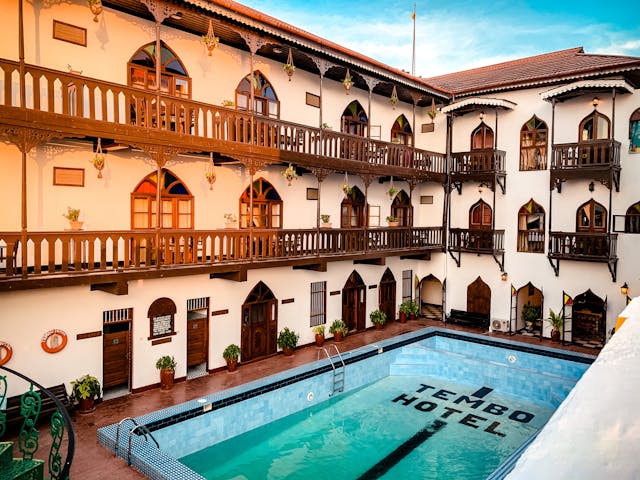
Cities don’t just grow to accommodate tourists, they fundamentally shift around them. The bits of town where people go to have a good time, the areas around transport hubs that get packed with people and the places where money gets spent on hospitality. They all come about as a result of tourists shelling out cash. And it’s not just chance that leads to places that have a concentration of places like this popping up. It’s the sheer weight of all those tourists tramping through the city, cash flowing in and out of the local economy. This isn’t a Sydney & Melbourne thing only. Actually, it’s everywhere, and that includes reports from state governments and the Australian Institute of Criminology highlighting how tourism dollars get spent in all sorts of places, including licenced adult businesses.
Tourism Research Australia reckoned in 2023 that the whole sector was worth over AUD 166 billion. Not some marginal bit of the economy, this is the big one. We are still talking about millions of people, locals and visitors alike, swarming into big cities every year. In some tourism zones, the business activities of enterprises like Sydney brothel occur within larger entertainment economies that service both locals and tourists.
Laws, Licences, and the Shape of What Gets Built
The legal architecture of sex work does not simply shield workers or limit businesses. It also shapes how districts form. Sex work was decriminalised in New South Wales in 1995, meaning it sits among the more liberal regulatory structures in the country. Research by the University of New South Wales found real gains from that shift, including better health outcomes and stronger workplace safety compared to criminalised models elsewhere. Critics push back, however. They argue that legalisation tacitly encourages industry growth, especially in regions already oversaturated with tourism.
Victoria, on the other hand, ran a licensing model before ultimately enacting decriminalisation reforms in 2022. Government reviews of that licensing period uncovered what should not come as a surprise: complexity begets workarounds. The more complex the system, the more underground markets fill the space. Urban economists have argued that simpler legal frameworks draw adult businesses out into the open. Operators can plan without constantly guessing at compliance risk.
The scale gaps are dramatic on the international stage. The legal sex industry in Germany reportedly generates billions of euros a year, while the regulated brothel counties of Nevada are geographically contained and relatively small. Australia falls in between these two extremes. It is a small market by world standards. Tourism-driven urban demand continues to shape where businesses locate and how dense those locations become.
How Tourist Money Shapes Adult Entertainment Zones?
Sydney got over 3 million international visitors in 2024 and Melbourne clocked up over 2.5 million visitors in the same period and the whole of New South Wales had a whopping AUD 50 billion in tourism spend. You see it most clearly in entertainment precincts right around the centre of the city, bar strips, nightclubs and casino zones; that’s where all the action is, and it’s where the money flows. Researchers have observed this pattern time and time again and the result is that adult entertainment businesses tend to pop up in areas where there’s already a strong demand from tourists at night.
Health, Safety, and What Regulation Actually Changes
Any serious discussion of red-light districts invariably comes back to public health, and Australia is an interesting case study in this respect. Health experts attribute the lower rates of sexually transmitted infections among regulated sex workers in Australia, compared with their counterparts in criminalized environments elsewhere in the world, in part to the availability of medical services and workplace protections afforded by legal status. Both are absent where the industry is forced underground.
Decriminalized environments, where there is access to health care and reduced exposure to violence, have been shown in a study published in the Lancet to improve health outcomes. In New South Wales, targeted outreach programs for workers at licensed and private venues have continued to run. Advocacy groups continue to ask the harder questions: exploitation, trafficking, and the online markets that have flourished outside any formal regulatory system. These markets absorb demand that regulation never sought to capture.
One way tourism growth makes enforcement more difficult is that temporary visitors generate demand that spikes at unpredictable intervals. Large events, cruise arrivals, and festival seasons each push nightlife activity beyond what can be absorbed by normal resourcing. They also pull in additional policing and health support at short notice. Local governments have reacted by relying on surveillance systems, transport monitoring, and late-night safety programs. These tools are designed for managing entertainment districts that expand faster than the frameworks designed to control them.