
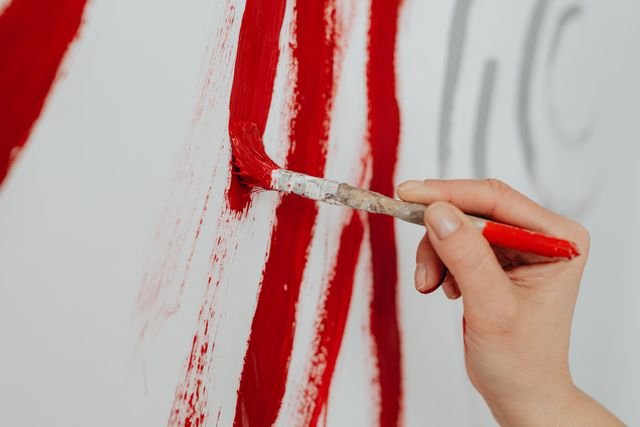
From the viewpoint of someone walking on the pavement, a perfectly finished hand-painted sign seems effortless to achieve. However, behind each letter are countless hours of measuring, sketching and careful brushing. By understanding this process, one realises the difference between these hand-painted signs and anything done by printers.
From Proportion and Layout to Letter Spacing
Each hand-painted sign starts with precise measurements of its surface. Dimensions and obstacles such as a door frame or window bars play an important role in designing the layout. Signwriters consider how far customers would stand from the sign when reading it.
Viewing distance dictates the appropriate height of letters more than individual preferences do. A road sign needs significantly bigger letters than a menu of a cafe. If done wrong, beautiful lettering becomes impractical on hand painted signs.
Letter spacing gets as much care as letter height. Professionals balance letter spacing using their experience rather than computer fonts which do it automatically. Sometimes difficult combinations like A-V need special attention.
Hand-painted signwriters use paper patterns for transferring designs onto the surface with remarkable precision. A pounce wheel, a small instrument, punches holes along each line of letters. Dusting chalk through these holes leaves the faintest mark for the brush to follow.
The Instruments Behind Hand-Painted Signs
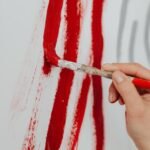
Brushes serve as the primary instruments for the signwriter and each brush is designed for a particular purpose. Long brushes made of natural materials that can contain enough paint are called quills. They make the smoothest lines. Liners and flat brushes serve other purposes.
A mahl stick helps keep hands steady during the process. Signwriters support their painting hand on the stick so that their fingers do not touch the wet paint. It allows making long and stable brushstrokes.
There is a difference between sign paints and ordinary house paint. Enamel paints cover better, flow smoothly and preserve the colour in sunlight. Special adhesive is needed for gold leaf work.
Surface Preparation, The Deal Breaker For Long Life
Painting onto a grimy or unstable surface is all but guaranteed to end in disaster, and you can forget about it lasting the distance. Timber needs to be sanded, then primed, metal on the other hand gets a good clean and some rust treatment. Checking for moisture, crumbling render and loose material on a masonry surface is the first thing you need to do.
And then there’s glass, its own very special case. Window signs are often painted on the inside face of the glass in reverse. So, writing the letters in reverse, usually starting off with an outline before filling in the colour is the way to do it.
Curved, ridged or uneven surfaces, these are the things that really put a signwriter’s skills to the test. Think: corrugated iron, rounded awnings and textured walls, these can all distort letters if you’re not careful. Adjusting the layout to suit those shapes, this is where the really good signwriters show off.
And then of course, there’s the safety side of things when working at heights. Anybody involved in this level of work needs to take heed of the working at heights rules, that means suitable platforms and decent fall protection. Any signwriter worth their salt plans the safe access route before they even lift a brush.
The Weather, And Melbourne’s Special Brand Of Unpredictable Days
Melbourne’s weather is famously changeable, and it plays havoc with outdoor sign work in ways you might not expect. A sudden downpour can strip fresh enamel right off the wall in minutes. And then there’s the wind, which just blows dust and debris right onto the wet paint.
Temperature and humidity also have a big impact on how paint behaves. Cold mornings slow everything right down, while hot afternoons can make the paint skin over far too quickly. And humid days just make the paint more vulnerable than usual.
So, what do signwriters do? Watch the forecast like hawks, and plan their exterior jobs around whatever the weather’s looking like. Spring and autumn are usually the best windows of opportunity for outdoor painting in Melbourne, and owners commissioning an outdoor sign need to be prepared for some flexibility in the start date.
Looking After A Hand Painted Sign Over The Years
Looking after a hand painted sign is pretty easy, provided you do it right. Just use mild soap and water to clean the thing, and you’re done. Harsh chemicals and power washers, no thanks. They’ll just strip the paint, or damage the delicate edges.
Protective coatings can be a good idea for some signs, especially if they’re out and about in the elements a lot. But a signwriter can advise whether that will actually help, or whether it might just turn everything a funny colour in a few years.
And then there are the little touch-ups you need to do from time to time, every few years to keep the thing looking fresh without completely repainting it. Faded colours can be refreshed, while the original design stays intact. That ability to repair instead of replace is one of the quiet strengths of hand painting.
And here’s the thing, every hand-painted sign is the result of hours of effort that you never even see. The measuring, the preparation, the waiting for the weather to be right, all that’s before the actual brushstrokes. Owners who understand the process tend to commission better signs and take better care of them for longer.