

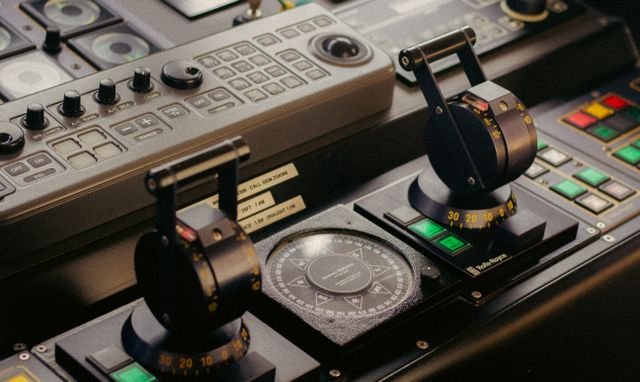
A programmable logic controller runs a repeating cycle measured in milliseconds. It scans the inputs arriving from field devices, executes the stored logic programme, writes the results to the outputs driving motors, valves, and actuators, then begins the cycle again. This continues without interruption for the operational life of the installation. On Perth’s mining and utilities sites, that lifespan frequently extends to decades, across facilities processing minerals, treating water, managing pump stations, and controlling chemical processes that cannot stop without consequence.
Understanding this basic mechanism matters because it explains why the quality of PLC Programming Perth has direct operational consequences. A PLC running flawed logic produces incorrect outputs, and a PLC running correct logic that was written without structure or documentation produces fault conditions that no maintenance engineer can diagnose quickly. Both outcomes are expensive, and Perth’s industrial sector operates in environments where unplanned downtime carries costs that make prevention the only sensible engineering objective.
The Languages That Govern PLC Programming Today
PLC program development is based on the IEC 61131-3, an international standard that establishes programming language syntax and semantics for programmable controllers. The current edition is IEC 61131-3:2025 (Edition 4) published in May 2025. It comprises a suite of three programming languages; structured text (ST), ladder diagram (LD), and function block diagram (FBD), together with the use of elements of sequential function charts (SFC) to structure the program and the function blocks. Instruction List, present in previous editions, has been dropped from Edition 4.
Each of these languages serves certain application conditions. Ladder diagram, with contact and coil notation similar to that of relays, is still popular for discrete control and safety interlocking logic partly due to the fact that its graphic presentation can be understood by experienced maintenance trades who have not written the programme themselves. Function block diagram employs graphic blocks connected by signal lines; it is suitable for process control applications and drives where relations between signals in functional blocks should be made evident. Structured text is used for mathematical computations, data processing, recipe handling and all other tasks where text expression is more efficient than graphic ones.
Code That Has to Outlast the Engineer Who Wrote It
The PLC programmes are updated by engineers who were not involved in writing them at all initially and often many years after initial installation, under pressure to keep production going with inadequate documentation and lack of context as to the intentions of the original programme. A programme which was not written with structure or comments is an increasingly serious liability the longer the system runs.
Tag names, routine names and module names avoid the mistakes which happen when a new engineer traces a problem through an undocumented programme. Comments within the programme to explain the intention behind each routine as well as describe what the logic does allows the maintenance engineer to understand what is expected of a segment of code before modifying it. Modularisation into functions avoids any overlap and keeps each function’s job small and well-defined so it is easier to troubleshoot and less likely to introduce a new problem when changing it.
Testing Before the Cables Are Connected
Factory Acceptance Testing is the cheapest time in any project to discover programming flaws in the system. In Factory Acceptance Testing, the inputs required by the program in the field are simulated and it is verified that it behaves as per the specification in response to all the conditions mentioned in the functional design specification, including abnormal inputs, fault conditions and emergency shutdown procedures. I/O simulation makes Factory Acceptance Testing possible before the field devices are installed in the factory. Documentation of test results for each specification item becomes the record needed for client approval and, where necessary, for regulatory approvals.
Conditions that cannot be simulated in a factory setting, like the dynamics of big pump installations over long pipeline runs, are checked during the commissioning at the site. The theory is that at the stage of commissioning, the fundamental logic of the system is already tested; commissioning checks out the integration and behaviour in site conditions.
What Perth’s Industrial Sector Specifically Requires?
Invest and Trade WA indicates that Western Australia makes up 62% of Australia’s investment in the mining and petroleum industry, with annual investments in the sector valued at $33 billion as of 2024-25. Such concentration makes for programming needs specific to the industry rather than general manufacturing requirements.
Safety Instrumented Systems are common on Perth’s oil, gas, and chemical sites and require programming for compliance with functional safety standards and SIL classification under IEC 61511. PLC-to-SCADA data acquisition layer integration through OPC-UA, Modbus, EtherNet/IP and other protocols is expected in almost all projects in this market segment. Programming of Variable Speed Drives includes configuring torque control, ramp rates and feedback loops, which entails knowledge of the specific drive hardware.
Perth industrial facilities do not standardise on one PLC vendor. Allen-Bradley, Siemens, Mitsubishi, Omron, Schneider Electric among others all make their way into active sites in the Perth area. Engineers who can write, commission, and support programmes in a variety of those PLC platforms without making errors of consistency when integrating systems made by different vendors are precisely what Perth operators need.